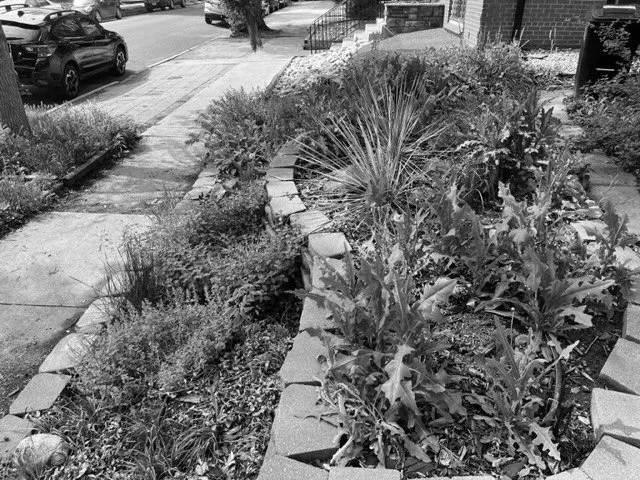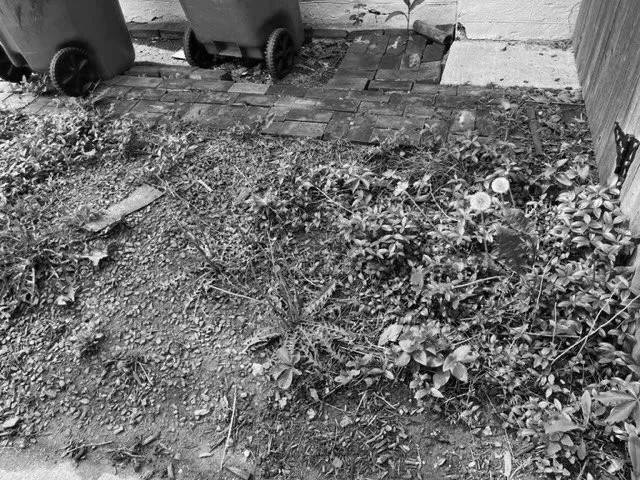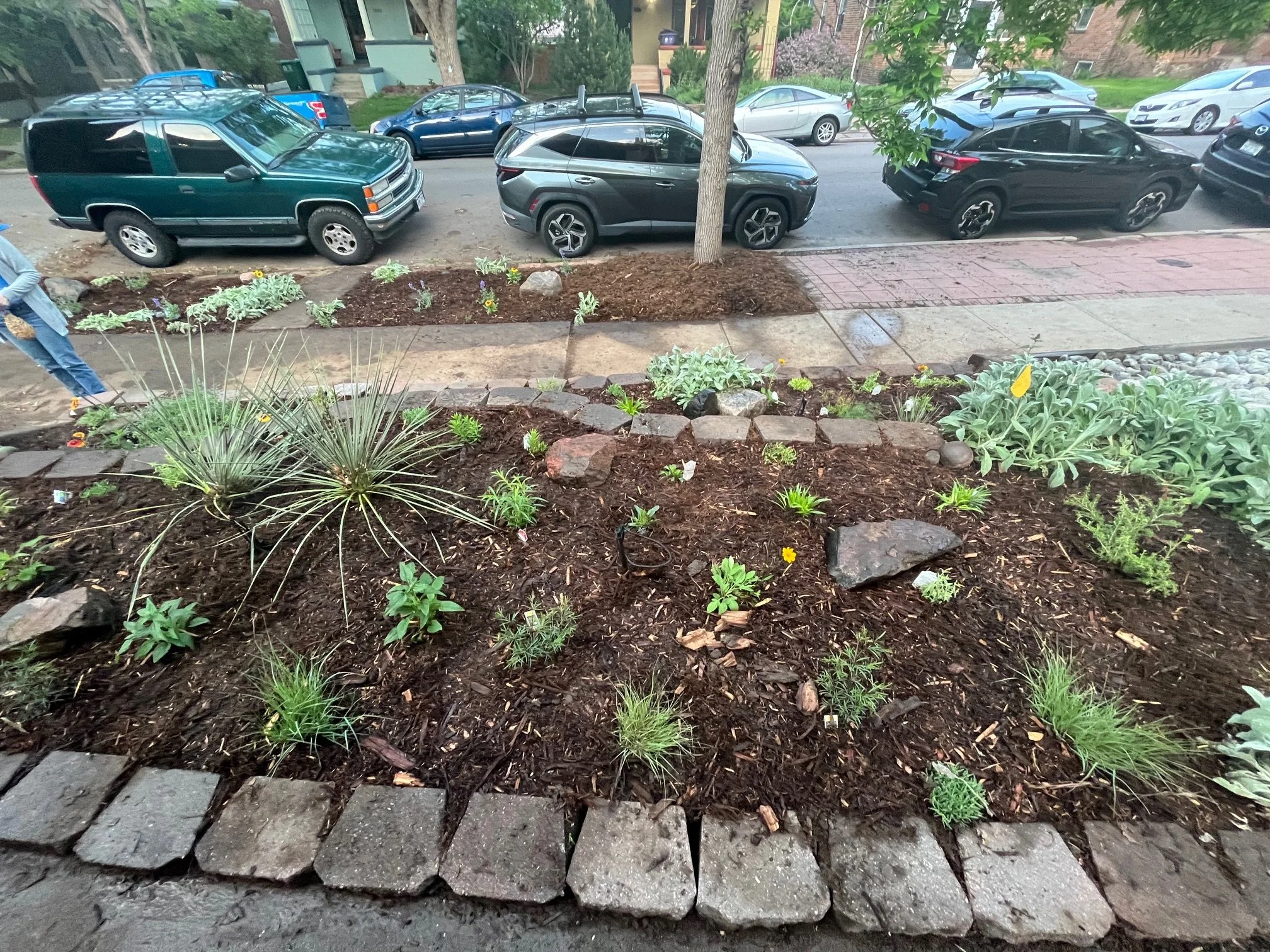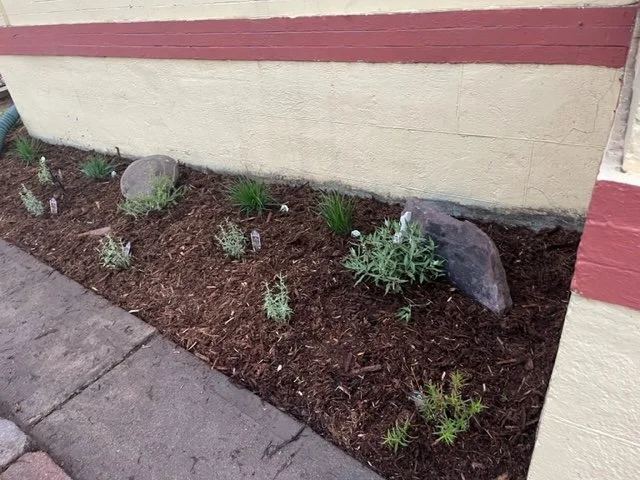
On the day we began installing this garden, Denver’s air quality ranked third worst in the world. Driving through thick smoke that hid the Front Range, I was reminded—again—of the reality of climate change in the American West. As landscape designers, we work daily in a region shaped by ongoing drought. Communities are seeking real strategies to conserve water, and we are committed to creating landscapes that meet this moment with beauty and resilience.
So when this wonderful family reached out wanting to transform their traditional front lawn into a water-wise, xeric garden, we were overjoyed. A water-wise landscape uses plants that thrive with efficient watering, plants adapted to our climate, soils, and seasons. Guided by a palette of blues, yellows, purples, whites, and the occasional burst of orange, we set out to create a garden that feels vibrant, textured, and alive.
What We Did
Removed invasive species & prepared the soil — We started by removing aggressive weeds like myrtle spurge, then prepped the soil to support long-term plant health and deep rooting—key elements of drought-resilient design.
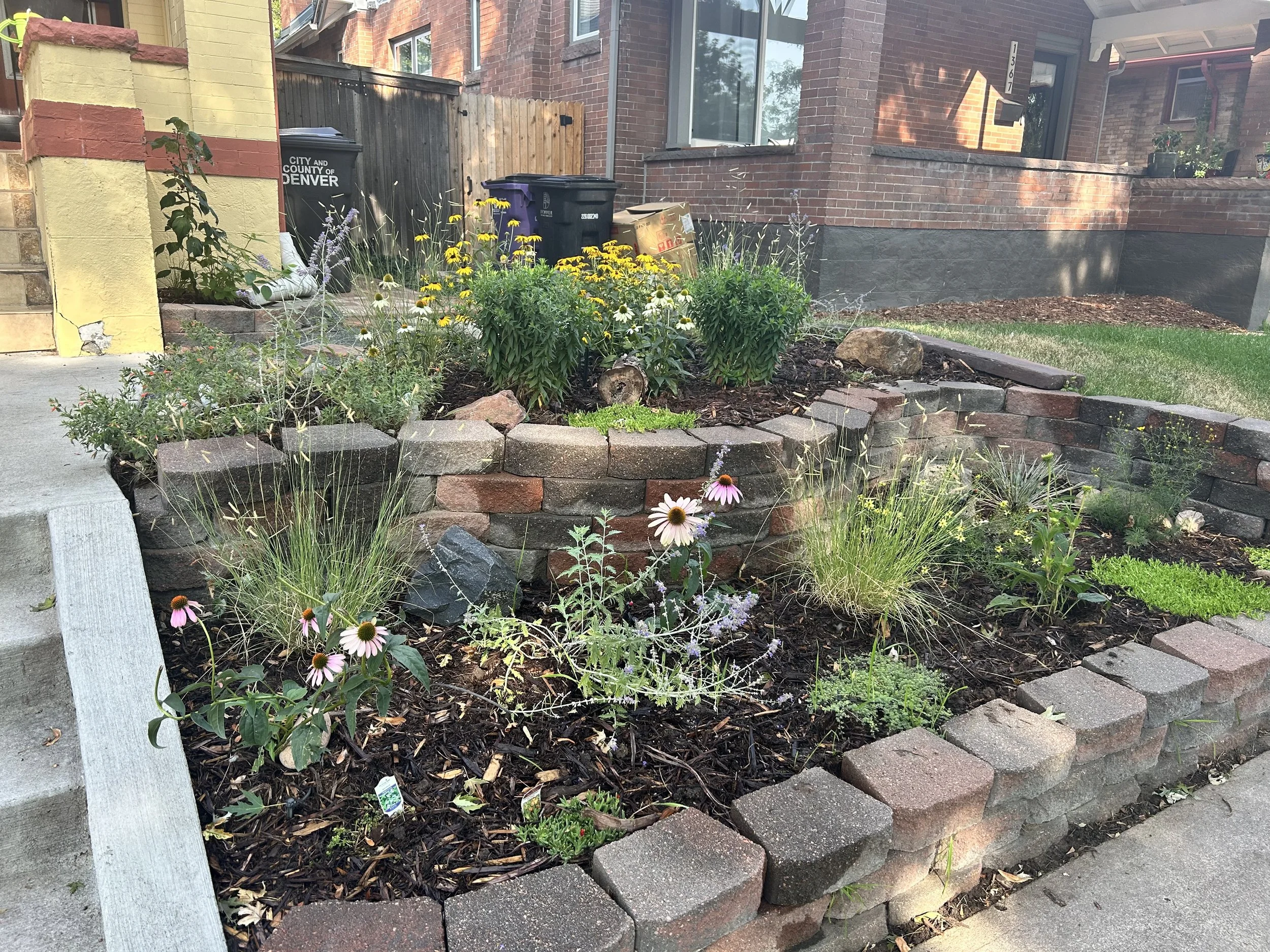
Designed a fully xeric, water-wise planting palette — Focusing on native and regionally adapted species ensures this garden will require minimal watering once established. Many of the plants were chosen for their medicinal, edible, or pollinator-friendly qualities, adding layers of purpose beyond beauty.
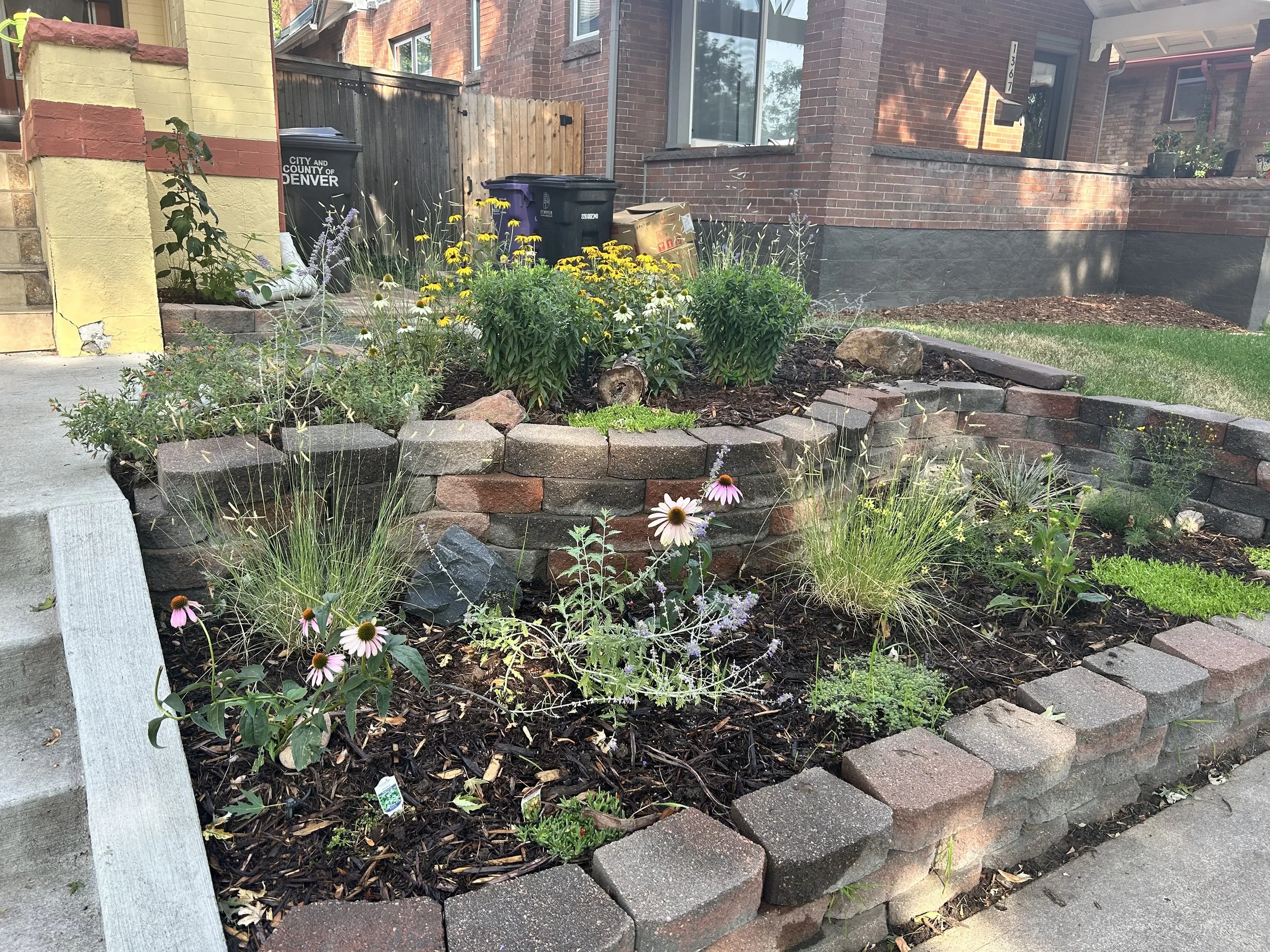
Crafted a dynamic, four-season composition — We wove Coreopsis among Yuccas and Liatris, added the soft fragrance of Hyssops, and mixed textures, heights, and bloom times to create a landscape that moves, buzzes, and hums with life.
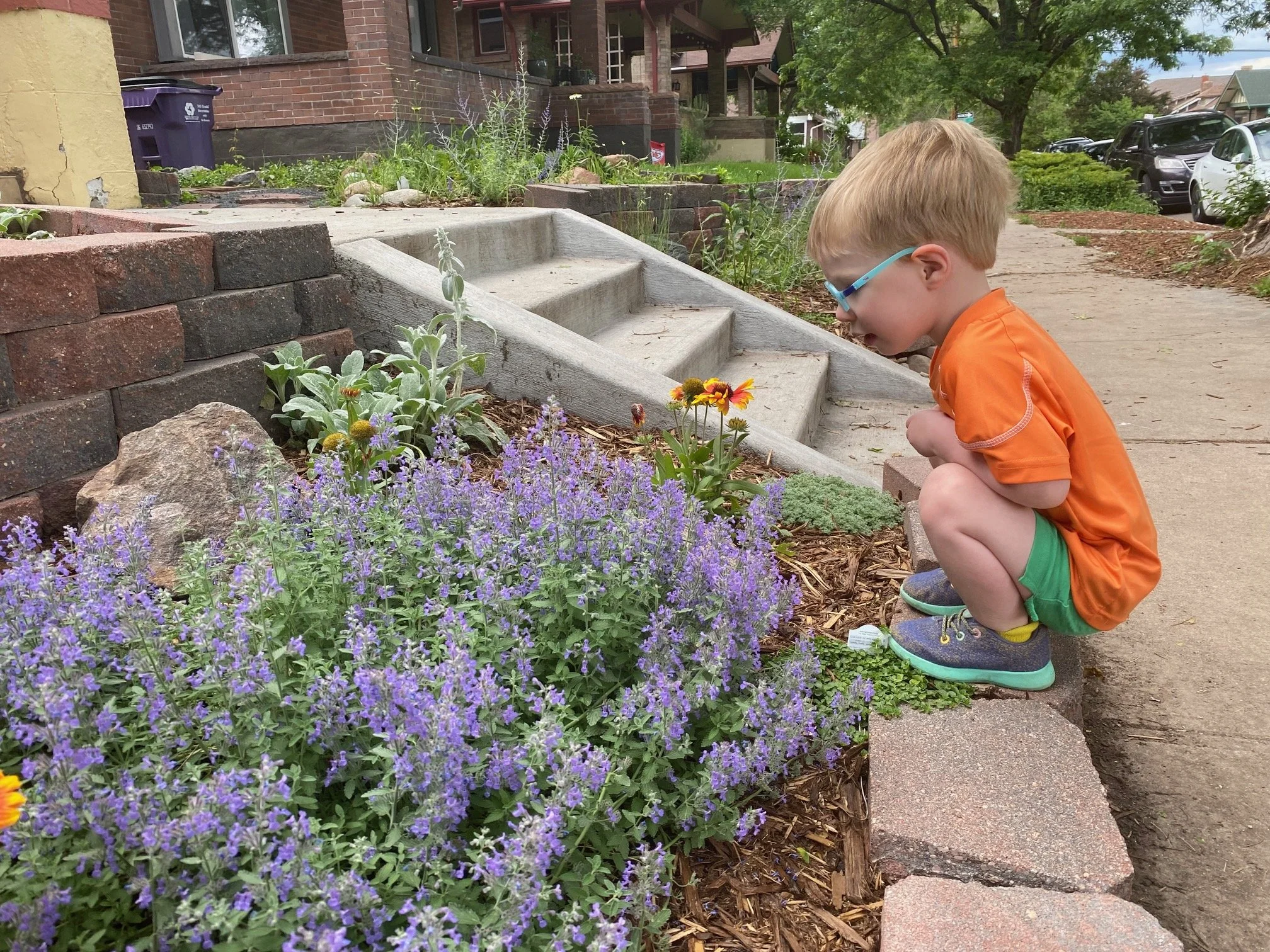
A Garden That Will Grow More Beautiful Each Year — This new front yard will continue to evolve with the seasons—supporting birds, bees, and beneficial insects while significantly reducing water use. We can’t wait to watch it mature and will be sharing updated photos at the end of the 2023 season.
This new front yard will continue to evolve with the seasons—supporting birds, bees, and beneficial insects while significantly reducing water use. We can’t wait to watch it mature and will be sharing updated photos at the end of the 2023 season.